
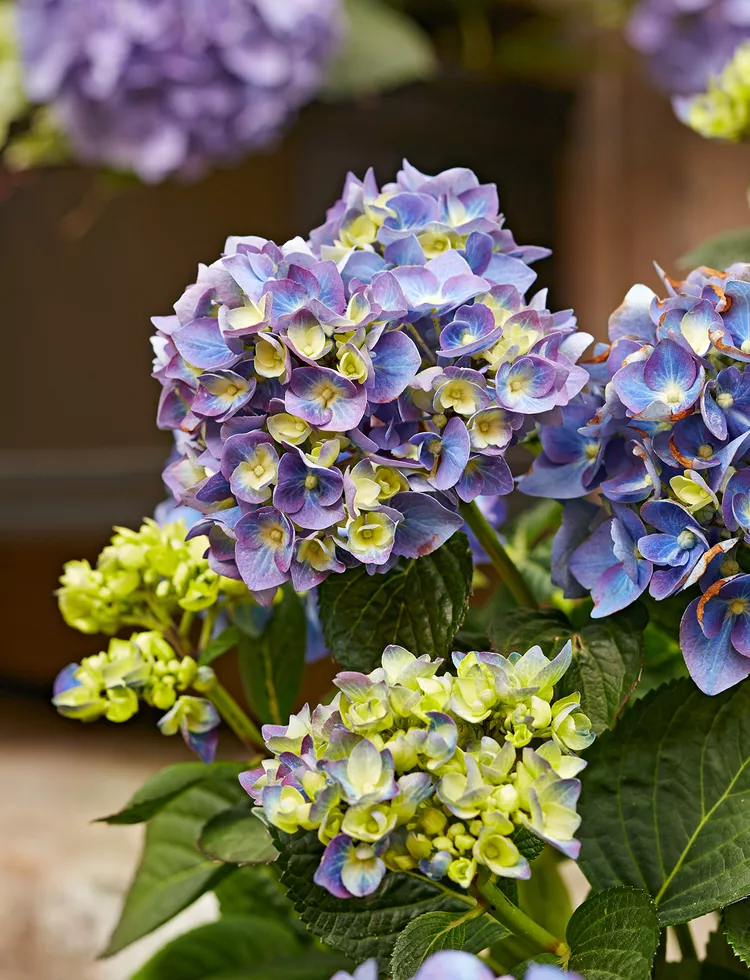
From wedding bouquets to flower beds, hydrangeas are everywhere. One glance and it’s easy to see why we all love the candy-colored flowers of hydrangeas so much. The giant clusters of flowers grace landscapes around the world. There are over 75 different kinds of hydrangeas, with more gorgeous varieties coming out every year. Plus, they’re a pretty hardy plant, growing in Zones 3-7, which is the bulk of the United States. Coast to coast, gardeners pretty much everywhere (except for really hot regions) can enjoy them. But even the most obsessed gardeners just might be surprised by these 8 facts about hydrangeas, and make you love these beautiful plants even more.
1. Meaning Behind the Name
Believe it or not, you can tell a lot about hydrangea plant care by its name. Hydrangea is from Greek descent: “Hydro” means water and “angos” means jar or vessel. And in fact, hydrangeas need lots of water to thrive.
2. Hydrangea Symbolism
The symbolism behind the hydrangea flower differs with culture and time period. In Japan, hydrangeas are said to be a sign of gratitude because ancient emperors would give them to their maidens as a sign of thanks. On the other hand, Victorians believed that hydrangeas symbolized boastfulness or vanity because they produce so many blooms but drop little seed to share. Each hydrangea color also has a meaning behind it:
- Pink represents love and sincerity
- Blue represents forgiveness
- White represents boasting or bragging
- Purple represents abundance and understanding
3. Discovery of Hydrangeas
Although most hydrangeas are native to Asia, some are native to North America including smooth hydrangea (Hydrangea arborescens) and oakleaf hydrangea (Hydrangea quercifolia). One very popular variety of smooth hydrangea called ‘Annabelle’ was even discovered in 1910 by a woman named Harriet Kirkpatrick. She noticed this hydrangea had very large white blooms, so she planted it in her own yard in Illinois. She and her family shared it with neighbors as the plant kept growing in popularity, but it wasn’t until 1962 that it was named after Kirkpatrick’s hometown of Anna and grown commercially.
4. Hydrangeas Are Poisonous
Hydrangeas are extremely poisonous. The compounds in the leaves release cyanide when eaten, so keep the plant away from small children or pets. Although they’re poisonous, it’s reported that ancient Buddhists used the roots as an antioxidant in tea to cure kidney issues—but don’t try this at home!
5. The Flower Color Can Change for Some Hydrangeas
For one type known as bigleaf hydrangea (Hydrangea macrophylla), you can change the color of their flowers by adjusting the soil pH with soil amendments. The more acidic the soil, the bluer your hydrangeas will turn out. The more alkaline, the pinker your hydrangeas will be. Science for the win!
6. Hydrangea Day
People love this plant so much, there’s a day dedicated to it! Hydrangea Day is January 5. However, the flowers are out of season at that time of year. Don’t fret, you can still enjoy hydrangeas at any time of year—try drying them to preserve them!
7. Allergy Safe Flowers
Hydrangeas are unique because they have super sticky pollen. That makes it difficult for wind to blow the pollen around, making these flowers perfect for allergy-prone gardeners. They’re also fragrance free, which makes them a great addition for those who are headache prone or have sensitive noses.
8. No Petals
It may look like hydrangeas have tons of petals, but they’re actually called sepals. Sepals are small leaves that protect the flower bud. They usually start out green and turn into the rich pinks, purples, and blues that grab our attention.