
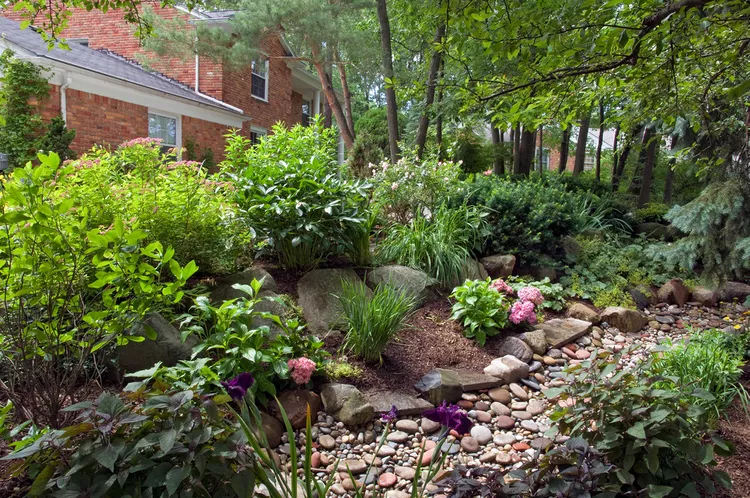
Whenever it rains, all that water has to go somewhere. Unfortunately, our homes, patios, driveways, and other hard surfaces prevent water from seeping into streams and underground aquifers. Instead, the rainwater usually runs into storm drains and sewers, often carrying pollution that can contaminate water supplies.
Creating a rain garden in your yard is a practical and beautiful solution. This water-smart landscape feature is designed to catch and filter rainwater runoff with the help of native plants. Plus, your rain garden will provide a home to birds, butterflies, and other beneficial creatures. Use these easy steps to design your own eco-friendly rain garden.
What You'll Need
Equipment / Tools
- Soil test
- Shovel
Materials
- Water-absorbing compost (optional)
- Topsoil (optional)
- Native plants and grasses
- Border plants
- Mulch
Instructions
How to Create a Rain Garden
-
Choose the Right Site for Your Rain Garden
Take a good look at your yard: Do any low areas have a little standing water after heavy rain? That could be a natural place to start a rain garden. You also want the site to be in full sun to part shade and at least 10 feet away from your house. Finally, locate your rain garden down a slope from a downspout, ditch—or another water outlet—running off hard surfaces on your property.
-
Prepare Your Soil
Remove any lawn or other vegetation from the spot where you'd like to create a rain garden. Clay soils work best because they have a slower percolation rate, allowing water to drain slowly. If you are unsure of the type of soil you have, complete a soil test, which can usually be done for a small fee through your state's extension service. If you have loose, sandy soil, you will need to add water-absorbing compost and topsoil to the rain garden area.
Using a shovel, dig out the soil to a depth of 6 inches, gently sloping down from the outside edges to the center where it should be deepest. Use the loose soil to create a low berm on the lowest side of the rain garden. As water flows into your new rain garden, the berm will help hold it long enough to seep into the soil. If you make the garden deeper than 6 inches, mosquitos could become a problem because it will take the water longer to percolate down and evaporate completely.
-
Select Native Flowering Plants and Grasses
The best rain garden plants are those that can tolerate wet sites. Many native plants from boggy habitats work well. Use native grasses, sedges, and rushes in at least one-third to one-half of the rain garden. These plants have very deep root systems that help water seep down into the soil. Also, select plants with different foliage, texture, and colorful flowers for the prettiest look.
-
Add in Marginal Plants
Other good plant choices for a rain garden include marginal plants that aren't necessarily native. These plants typically grow near the margin or edge of a pond and tolerate both extremes of moisture: They thrive in soggy soil but are content in dry spells, too, bouncing back when water becomes available again. Such plants include 'Bengal Tiger' canna, scarlet rose mallow, yellow flag iris or Siberian iris, cardinal flower, and obedient plant.
-
Plan and Plant Your Rain Garden
In the final step to designing a rain garden, arrange the plants how you'd like them, spacing them according to label directions. Consider planting in larger drifts of five to seven plants for a more natural look and the best overall impact. Once you've gotten all plants in the ground, water well and add a layer of mulch.
If the weather is dry for the first couple of weeks after planting, continue watering to help your new plants get established. Remove any weeds that pop up. After your rain garden's first summer, it won't need much additional care other than cutting back old, dead growth in spring.