
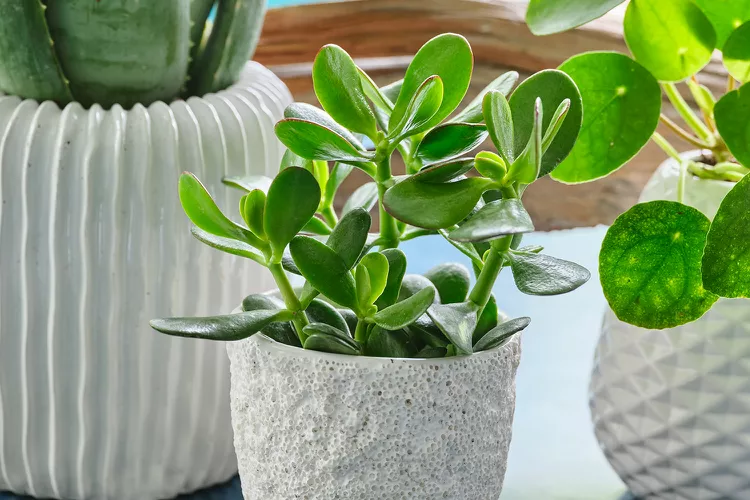
When it comes to indoor succulents, jade plants (Crassula ovata) are some of the easiest to grow. And when you know how to propagate jade plants, you've got a budget-friendly way to add more of these easy-care houseplants to your collection and salvage any broken stems and leaves. These tips and step-by-step instructions will teach you everything you need to know about propagating jade plants in both soil and water.
Jade Plant Propagation Tips
Jade plants aren’t too fussy about their care, and their adaptable nature makes them some of the easiest succulents to grow and propagate.
- Jade plants can be propagated at any time of the year, but you’ll get the best results if you propagate your plants when they’re actively growing in spring or summer.
- Warm temperatures speed up rooting, although you’ll want to avoid propagating plants that are flowering.
- It’s essential that you take stem and leaf cuttings from healthy plants. Jade plants that are stressed or suffering from pests or diseases may not develop roots well. However, if jade plants have bright green, plump leaves, there’s a good chance the cuttings you take will root without any trouble.
Propagating Jade Plants with Stem Cuttings in Soil
The easiest and most reliable way to produce new jade plants is to propagate stem cuttings in soil. Stem cuttings produce larger jade plants and develop roots more quickly than leaf cuttings. However, you need a large, established jade plant if you want to take a lot of stem cuttings.
Step 1: Take healthy, 3- to 5-inch stem cuttings from an established jade plant using a sharp, clean knife. Cut directly below a leaf node and ensure each cutting has at least three or four healthy leaves at the top of its stem. If your cuttings have leaves on the lower section of their stems, gently break off the lowest leaves so you can plant the cuttings in soil later on.
Step 2: Place the cuttings on a plate or paper towel and move them to a warm, dry place that’s out of direct sunlight. Leave the cuttings to dry for a few days undisturbed. This process allows the cut stem ends to callus over and reduces the chances that the cuttings will rot later on.
Step 3: Plant the cuttings vertically in small pots filled with a pre-moistened potting mix that’s appropriate for succulents and cacti. Bury the stems about 1 inch deep in the substrate and firm the soil around the cuttings to keep them upright. To increase the chances that the cuttings will root, dip the cut ends in rooting hormone before planting them.
Step 4: Move the pots to a sunny windowsill that receives bright, indirect light, where they will grow for a few weeks. During this time, water the cuttings sparingly whenever the top ¼ inch of soil feels dry.
Step 5: You’ll know the cuttings have developed roots when they show new growth and can’t be pulled from the soil easily. At this point, repot the rooted jade plant cuttings into larger pots if needed.
Don’t cover jade cuttings with domes or plastic baggies while they’re rooting. Jade plants are sensitive to too much humidity, and an overly humid environment increases the chances of rot.
Propagating Jade Plants with Stem Cuttings in Water
Jade plants typically root more reliably in soil, but you can also try propagating these houseplants in water. Keep in mind that jade plants grown in water often root quickly, but they can sometimes struggle when transplanted into soil.
Step 1: Take stem cuttings from jade plants and allow them to callus over for a few days, just like you would if you were rooting jade plants in soil.
Step 2: Place the cuttings in a clear propagation jar or vase filled with about 1 inch of water. Ensure that the bottoms of the cuttings are submerged in the water and that all the leaves are above the water line. Add some clean gravel to the propagation jars if needed to keep the cuttings upright.
Step 3: Move the cuttings into bright, indirect light and wait for them to root for 4 to 5 weeks. During this time, check the propagation jars often and refresh the water when it runs low or becomes cloudy.
Step 4: When your jade cuttings have formed roots, plant the cuttings in pots filled with a well-draining potting mix intended for succulents and cacti. Bury the jade plant roots about 1 inch deep and water them lightly. Move your new jade plants into bright, indirect light and water them when the soil dries out. With luck, you should start to notice new growth soon.
Propagating Jade Plants from Leaf Cuttings
In their natural habitat, jade plants propagate themselves when they drop leaves onto the soil and those leaves then develop roots. Because new jade plants can grow from a single leaf, this can be an excellent solution if you accidentally knock a few leaves off your plants. You can also use leaf propagation methods if you want to propagate a plant that’s too small for stem cuttings.
Step 1: Gather leaves that fell from the plant or gently break off the leaves with your fingers. Cutting off leaves with a knife can damage the leaves and make them less likely to root. Choose leaves that are intact, healthy, plump, and without holes, breaks, or signs of disease.
Step 2: Spread the leaf cuttings on a paper towel or plate and place them in a warm, dark place for several days until their cut ends callus over.
Step 3: Fill planting pots with a pre-moistened potting mix suitable for succulents and cacti and spread the jade leaves flat in a single layer over the substrate so the leaves aren’t touching each other.
While you can propagate jade leaves in pots, you can also use seed-starting trays if you want to propagate many jade leaves at once.
Step 4: Place the jade leaf cuttings in bright, indirect light and water them sparingly when the top ¼ inch of soil feels dry. There is no need to cover the jade leaves with a humidity dome while they’re rooting.
Step 5: After a few weeks, the jade leaves should start to form roots. Then they'll develop small plantlets within two months. Once those plantlets are 1 to 2 inches tall, pot them in individual containers filled with a well-draining potting mix and care for them like an adult jade plant.