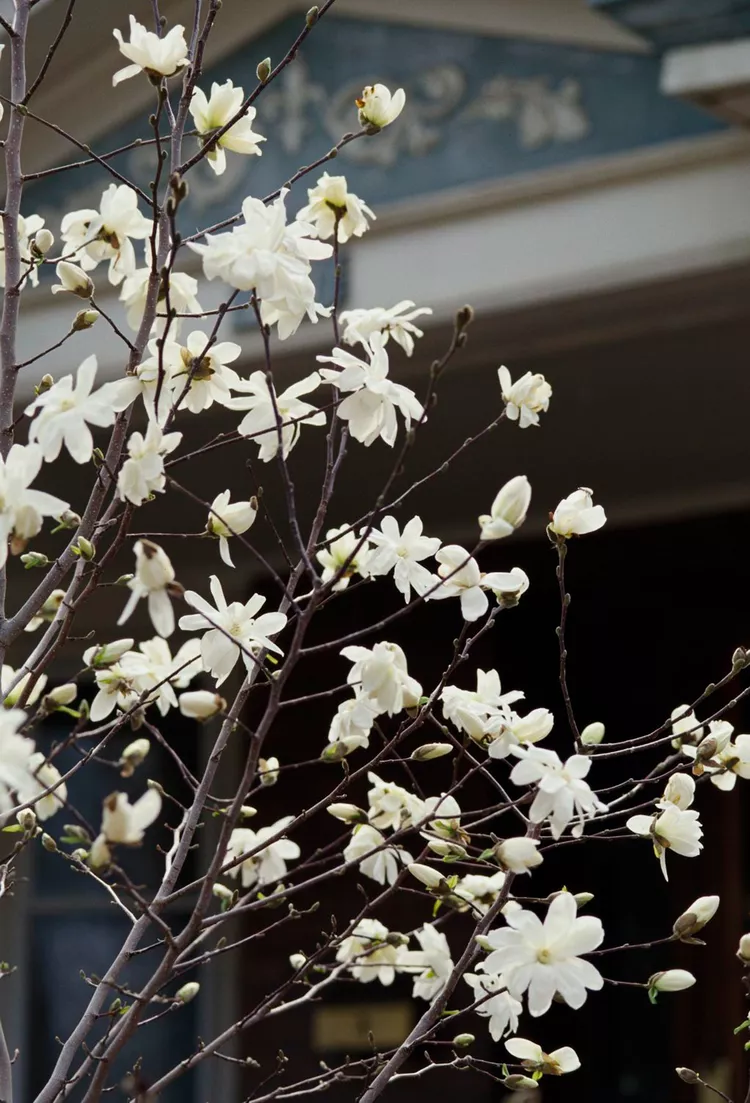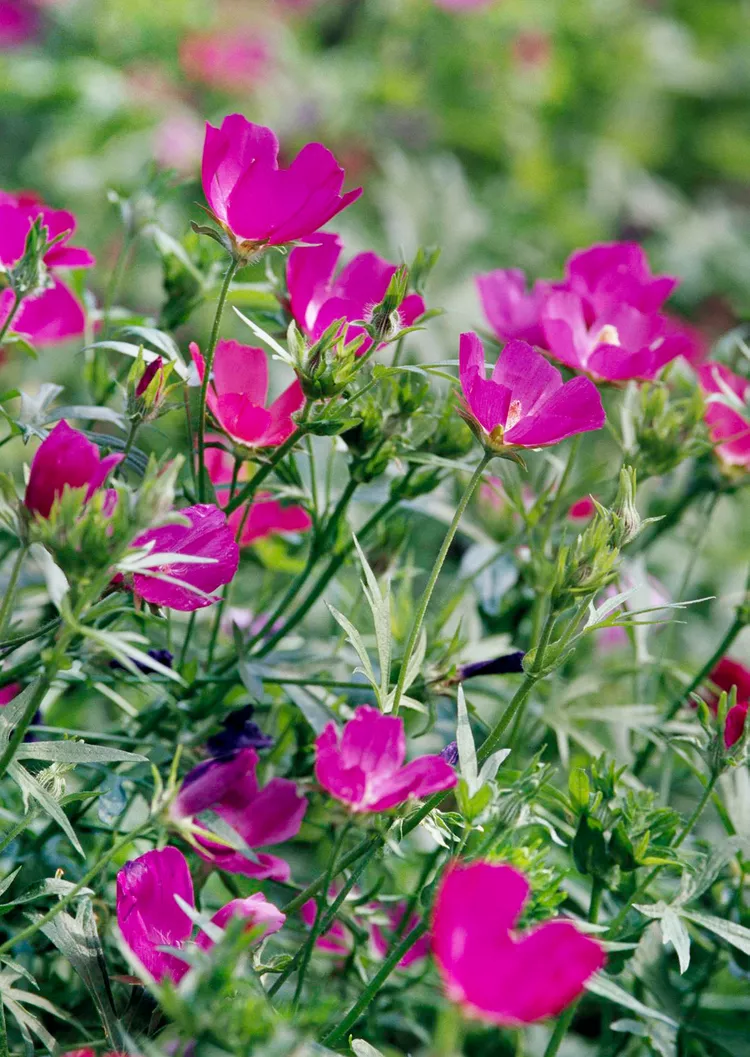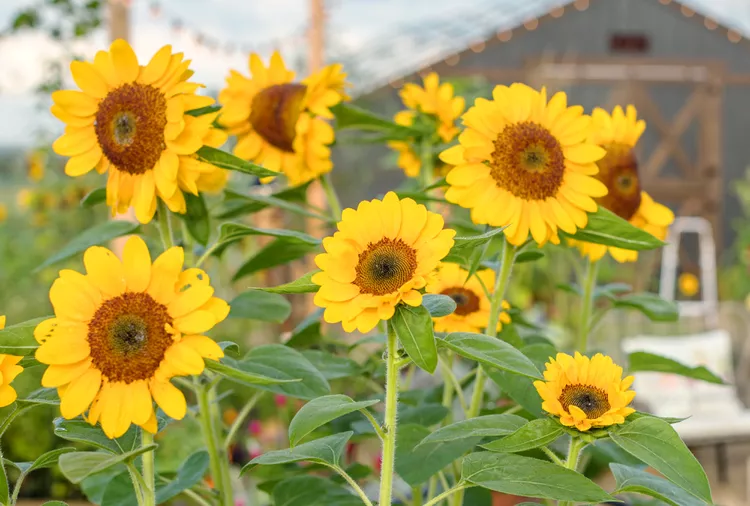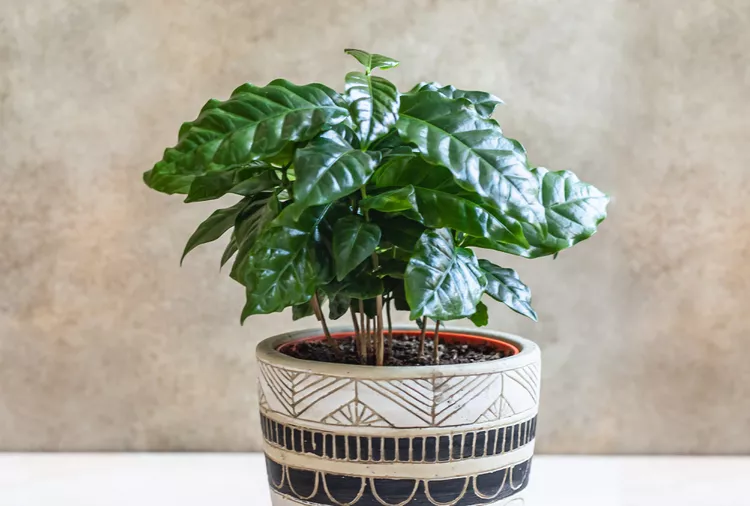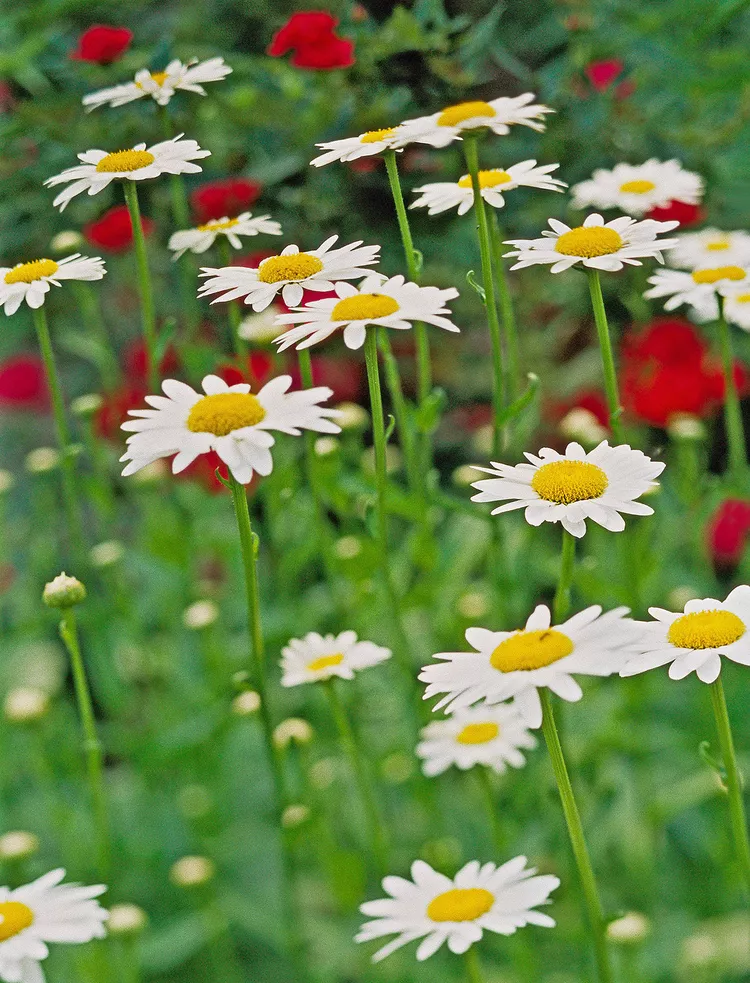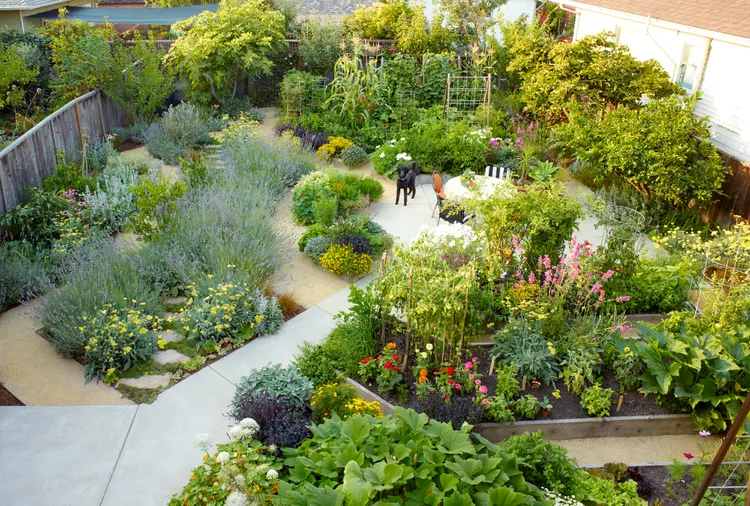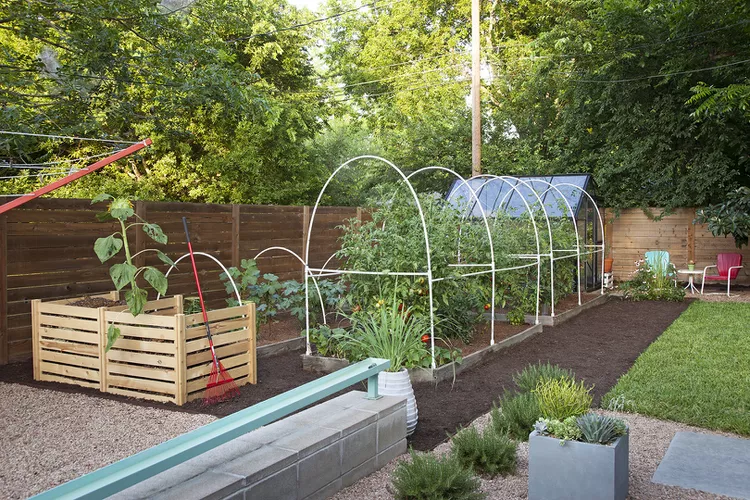
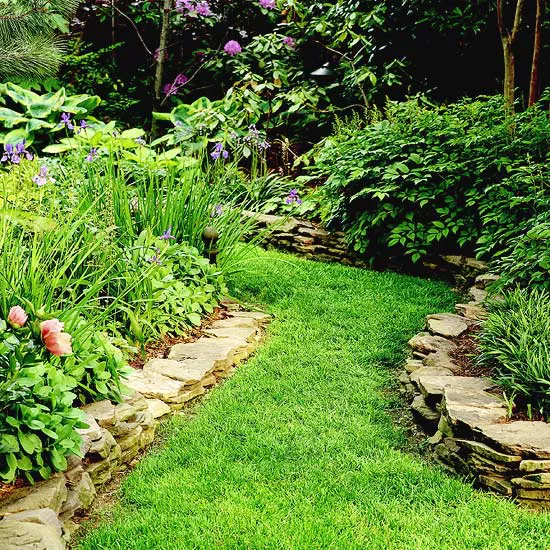
Line is one of the most important and useful of all design elements. Garden lines are part of every yard design. Think about the trunk of a tree, the distant horizon, the line created when a lawn ends, and the adjacent woods begin. A sidewalk, driveway, or fence is a clear and readily accessible line in the landscape. As you plan and design your landscaping, always consider the garden line created by whatever you add.
There are four main ways to describe lines: curved, straight, horizontal, and vertical. None is more important than the others -- each has different effects. Strong lines can draw your eye into the landscape, directing both where people look and where they go.
- Curved lines shape informal garden beds and add interest to pathways.
- Straight lines evoke a sense of order and a more formal crispness.
- Horizontal lines create a soothing sense of stability. Think of the ocean and how its vast expanse meets the sky, creating a sense of peacefulness and majesty.
- Vertical lines project a sense of strength and movement.
Regardless of the line you use, be aware that lines lead the eye. Lines going away from you on the ground draw you forward. Horizontal lines on the ground slow you down. Vertical lines lead the eye up and out of the garden. Curving lines evoke an intriguing journey. All are desirable garden lines.
Light
What could be more lovely than early morning or evening in the garden when plants virtually glow from warm backlighting? Who can deny that light gives plants life?
Light and shade change the way colors look and how they work together. Although you can't control natural light, you can play up its effects. A bright light has the same impact as warm color -- it advances visually, making an object or area feel closer than it really is.
Keep in mind that light can be either natural or artificial. Adding a low-voltage lighting system can easily extend your garden enjoyment into the evening hours. Various fixtures and their positioning create different effects. Front lighting in a dark area highlights a particular feature. Backlighting silhouettes a sculpture, tree, or shrub. Side lighting can produce dramatic effects but is used mainly for safety along walks and paths.
Texture
Texture evokes emotional responses. Both tactile and visual textures invite you to touch. Use texture to contrast plants in groups or minimize architectural lines. Combine a range of fine-, medium- and coarse-textured plants to achieve balance and a bit of drama.
The characteristics of texture divide plants into three basic groups: coarse, medium, and fine. Coarse-textured plants, hardscaping materials, or garden structures have large or boldly tactile components, such as rhubarb leaves or an arbor made with rough-cut 8x8 posts. Fine-textured materials include many ferns and grasses or a delicate structure such as a bent-wire trellis or arbor. Medium textures fall in between.
Changes in texture can be subtle; the textures of various plants (and objects) are relative to one another. For example, when viewed alone, ornamental grass may seem like a fine-textured plant. However, compared with zoysiagrass, which is much more finely textured, it may appear more coarse-textured.
You'll find lots of textures -- smooth or prickly, ripply or frilly -- and endless ways to combine them to achieve repetition, contrast, balance, and unity. All are found in a successful garden.
Often, the textural appeal of plants is found in their leaves. Dainty-leaved plants make a staccato of dots; grasses, irises, and daylilies paint pleasant, smooth stripes. Smooth hostas paired with astilbe's feathery flowers and serrated foliage make a classic combination.
Form
A landscape without strong, contrasting forms becomes as confusing as a melody without rhythm. The form and shape of plants and other objects in the garden work to divide space, enclose areas, and provide architectural interest. Grouping plants highlights their shapes and creates various effects.
Round forms, such as boxwood or barberry shrubs add definition and stability to a mixed border. Likewise, a series of mounded forms create an undulating rhythm.
Repeated, narrow verticals also add stability. Alone, an upright arborvitae or a thin cactus looks awkward. Clustered, they appear well-placed. The strong uprights of a fence add a sense of security and completeness.
Scale
Scale, or proportion, is the size relationship of one object to another. For example, a 30-foot tree is out of place in the middle of a small patio, but a dwarf tree makes sense. Conversely, a massive house overpowers a narrow front walk lined with strips of flowers.
Consider the ultimate size of a tree before you plant it. The most beautiful tree in the world will look awkward and out of place if it towers over the front of a house. However, if placed in the backyard, that same tree may provide a beautiful frame for the home.
Pattern
Pattern is the repetition of shapes in order. Pattern creates rhythm as well as charm and reinforces texture and contrast. Think of light and shadow as part of the palette when designing patterns. Use pattern to draw attention to an area; be careful not to overdo bold patterns, which can overwhelm.
Apply this principle when creating backgrounds, too. Lay a brick herringbone pattern in walkways, patios, entryways, and driveway borders to unify your hardscape. Employ pattern as a way to direct people through the garden, also.
Balance
Visual balance is achieved when the elements on each side of a real or imaginary axis are equal. For example, if too much emphasis is placed on one side of the garden, your eye will be drawn there more readily, not to the garden as a whole.
There are two basic types of balance: symmetrical (formal) and asymmetrical (informal). When establishing balance, you must determine a central reference point from which to draw an axis. It could be the front door, a tree in the backyard, or any other object.
Symmetrical, or formal, balance is the easiest to see and understand: The elements on either side of a real or imaginary line are mirror images. The pool garden below is a good example of this kind of balance.
Formal balance doesn't always suit a home or garden style. You may prefer informal—or asymmetrical—balance. For example, a large tree on the left can be balanced by three smaller ones on the right. Or a large mass of cool colors on one side can balance a small group of hot colors on the other.
Unity
Unity results when all basic garden design principles come together in a balanced, harmonious whole. Focusing on harmony will help as you choose from an exciting and sometimes bewildering array of plants and other landscaping materials.
Make simplicity a guidepost as well, and you likely will achieve a unified design that gives you a sense of completeness. Good structure in the overall design, combined with a hardscape that meets your needs, creates the perfect setting where you can place your favorite plants.
Contrast
Contrast emphasizes the difference between a plant or an object and its surroundings. Using contrast is the best way to avoid predictability in a garden. It also adds a visual sense of tension between elements. Like most garden design principles, in moderation, contrast is good, but too much can be confusing and overstimulating to the eye.
You can create contrast by manipulating various elements such as form, texture, and color. Achieve a distinctive look by planting the contrasting shapes of horizontal 'Bar Harbor' juniper in front of red-twigged dogwood, for instance.
You can contrast textures by varying hardscaping materials, such as bricks and gravel, or plant textures, such as a leathery-leaved magnolia next to a finely needled cedar or juniper shrub.
Finally, the colors of flower blossoms can create wonderful contrasts. The hues should be widely separated on the color wheel to be the most effective. For example, red and green, purple and orange, and yellow and blue represent the highest contrast in color. You can also contrast variegated leaves with solid colors or green and purple leaves.
Color
Color seduces the eye, evokes a mood, and reflects the seasons. As a powerful and unifying tool, color has predictable effects. Cool blues, purples, and greens soothe and recede, whereas warm reds, oranges, and yellows enliven and advance.
Single-color schemes enchant with their simplicity. However, the real fun comes in expressing your personality by combining colors. Some colors compete for attention; others harmonize.
Although flowers are the jewels of the garden, too many different colors look chaotic. Remember that a balance of subtly different colors creates a pleasing effect.
Rhythm
Rhythm and repetition come about when you correctly position or contrast features. Rhythm avoids monotony.
Gardens that may be complete in almost every sense may seem ordinary until rhythm is introduced. Examples of rhythm include a stately procession of shade trees along a drive or the repetition of pavers or the pickets in a fence. These elements create a clear sense of movement.
Rhythm doesn't necessarily require literal repetition. It may be achieved by the use of garden lines. The path shown here undulates with similar—although not exact—curves. In addition, the consistent use of the vertical lines of the bamboo helps create a sense of rhythm.
Another example of rhythm is the gradual change along a planting bed of warm colors and coarse textures to cooler colors and more delicate textures, then back to warm and coarse. As different plants come into bloom and then recede to be replaced by others, there will still be a satisfying sense of visual rhythm.
Variety
Just as you choose your guests for a dinner party with concern for their interests and personalities, so can you combine a variety of plants for compatibility.
Accents and focal points serve to make a landscape more interesting. Use them sparingly, however, to maximize their individual impact. Often, a single element added to an otherwise drab scene can make all the difference.
Similar shapes and colors reinforce a theme. But certain focal points, by virtue of their interesting character, deserve major attention. These focal points should stand out from the rest of the garden. Occasional accents, such as an arbor, a sculpture, or a specimen plant, help create a balance between the reference points and the background.