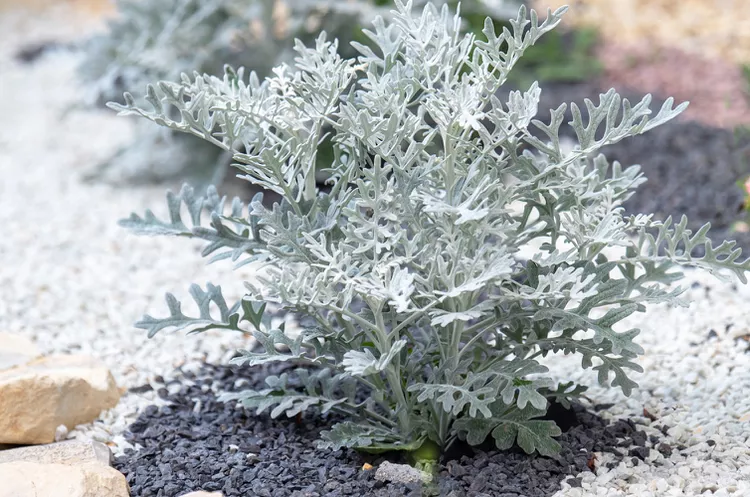
Dusty miller is easy to grow and long-lasting. This plant seems to thrive in almost any situation and is excellent both in the ground and in a container. Dusty miller is a tender perennial that's only winter-hardy in Zones 7-10. Otherwise, it's grown as an annual.
With its trademark silver foliage, dusty miller looks good in any combination of plantings, and it's a good bedding plant. It also works well as a filler for cut flower arrangements. The silvery look of the leaves comes from numerous tiny white hairs that are most prominent on the undersides of the leaves and the stems. Dusty miller makes a low-maintenance bedding plant.
Dusty miller is toxic to pets. The plant is mildly toxic to people as well.
Dusty Miller Overview
| Genus Name | Jacobaea maritima |
| Common Name | Dusty Miller |
| Plant Type | Annual |
| Light | Sun |
| Height | 6 to 12 inches |
| Width | 1 to 2 feet |
| Flower Color | Yellow |
| Foliage Color | Gray/Silver |
| Season Features | Colorful Fall Foliage |
| Special Features | Cut Flowers, Good for Containers, Low Maintenance |
| Zones | 10, 7, 8, 9 |
| Propagation | Seed, Stem Cuttings |
Where to Plant Dusty Miller
Plant dusty miller in your garden to add silvery brightness amid colorful flowers or greenery. Plant in an area that gets full sun most of the day but with some shade later in the afternoon in very hot climates. Use it as a background for low-growing annuals, as an edging plant, or in containers. This low-maintenance plant will thrive in drought-tolerant gardens.
How and When to Plant Dusty Miller
If growing dusty miller from seed, start them indoors about ten weeks before your area's last frost in spring. Sow the seeds in a location with 65º-75ºF temperatures where there's lots of light, uncovered on top of moist potting mix. Within 10-15 days, germination will take place.
If transplanting from containers, make a hole the same size as the container and add the plant so the stem is at the same soil level it was in its pot. Fill in around the root ball with soil and water well. Add more soil if needed.
Dusty Miller Care Tips
Dusty miller is easy to grow and even easier to care for. This plant seems to thrive in almost any garden or yard. Once established, it is very drought-tolerant.
Light
Dusty miller does best in full sun but will tolerate part shade. Part shade is 4 to 6 hours of direct sun per day, mostly morning sun. In more shade, the silver look of the leaves will be less intense, and the plants will look more green.
Soil and Water
Dusty miller needs to be planted in well-drained soil. In soil that is too heavy or too wet, there's a much higher risk of root rot developing. Because its origins are Mediterranean, dusty miller tolerates poor soil.
Water sparingly to prevent soil from getting waterlogged. The best way to check if dusty miller needs watering is to feel the soil. If the top 1 inch is dry, it's time to water. Indoor plants may need even less water since they don't get as much direct sunlight. Keep in mind that wilting may be a sign of too much, not too little, water.
Temperature and Humidity
Dusty miller thrives in heat, thanks to its Mediterranean origins. High humidity isn't a problem either, as long as plants have plenty of room to grow and lots of sunlight.
Fertilizer
Fertilizer is only necessary when the soil is poor. Amend the soil when planting dusty miller with organic matter like compost. Add slow-release fertilizer to the soil at planting time or provide water-soluble fertilizer at about half-strength every two weeks if needed.
Pruning
Dusty miller doesn't need pruning, but if some of the leaves begin to yellow or if it starts to sprout small flowers, you can clip them off for a more appealing look.
Overall, dusty miller doesn't mind being pinched or sheared back. This will help promote new growth and keep the plants lush and bushy. You can cut them back to encourage a flush of new silver growth late in the season when plants often start looking scraggly and leggy.
Potting and Repotting
Like in garden beds, dusty miller's silvery tones add a lot to container gardens and hanging planters. Use a light, porous potting mix in a container with plenty of drainage. If winters are cold, bring potted dusty miller plants indoors to protect them from the cold.
For plants grown as perennials, transfer the plants to a larger container when you see roots growing out of the drainage holes. Transplanting should be done during the spring or early summer for best results. Opt for a container one size larger than the current pot and fill it with fresh potting mix. Move the plant to the new pot and firm around the roots with potting mix. Water well to settle the plant and continue to water regularly until it's established.
Pests and Problems
There's very little to worry about when it comes to pests and problems for dusty miller. Slugs may chew on their leaves and require hand-picking to rid the plants of them. Deer stay away from dusty miller, so it's a good choice to use as a companion plant to species that deer like to eat. Root rot can be an issue because of overwatering; otherwise, they're pretty much disease-free.
How to Propagate Dusty Miller
Propagate dusty miller in spring by cutting a 6-inch stem from new growth. Strip off the leaves from the bottom 3 inches and dip the cut end in rooting hormone. Place the stem in a container with moistened potting mix. Keep moist and warm, then transplant once new leaves begin to grow.
Types of Dusty Miller
Since dusty miller has been around for quite some time, it's surprising that so few varieties are available. The few introduced are generally more silver than the straight species, or they offer more heat tolerance. A few have notably lacier leaves as well.
Blazin' Glory Dusty Miller
Senecio cephalophorus 'Blazin' Glory' is a heat and drought-tolerant choice bearing silvery tongue-shaped leaves and producing bold red flowers in summer. It grows 18 inches tall and wide.
Dusty Miller Companion Plants
Angelonia
Angelonia is also called summer snapdragon with its salvia-like purple, white and pink spires that reach a foot or two high. This tough plant blooms all summer long in hot, sunny spots. Some are sweetly scented. While most gardeners treat angelonia as an annual, it's a tough perennial in Zones 9-10.
Petunia
Petunias are failproof favorites for gardeners everywhere and look fabulous next to dusty miller. They are vigorous growers and prolific bloomers from midspring through late fall. Color choices are nearly limitless, and many varieties are sweetly fragrant. Some also tout themselves as "weatherproof," meaning the flowers don't close up when water splashes them.
Basil
Basil is a bushy plant suitable for garden beds or containers. Grow this cooking staple in a sunny spot, and you'll reap the rewards of flavorful foliage in shades of green, purple, or bronze. Basil plants are exceedingly sensitive to cold; start seeds indoors or sow outside only after all danger of frost has passed.
Garden Plans for Dusty Miller
Tiny Corner Garden Plan
Banish front-yard blahs by installing this easy corner-fence design featuring colorful, fast-growing flowers. It calls for 12 dusty miller plants.