
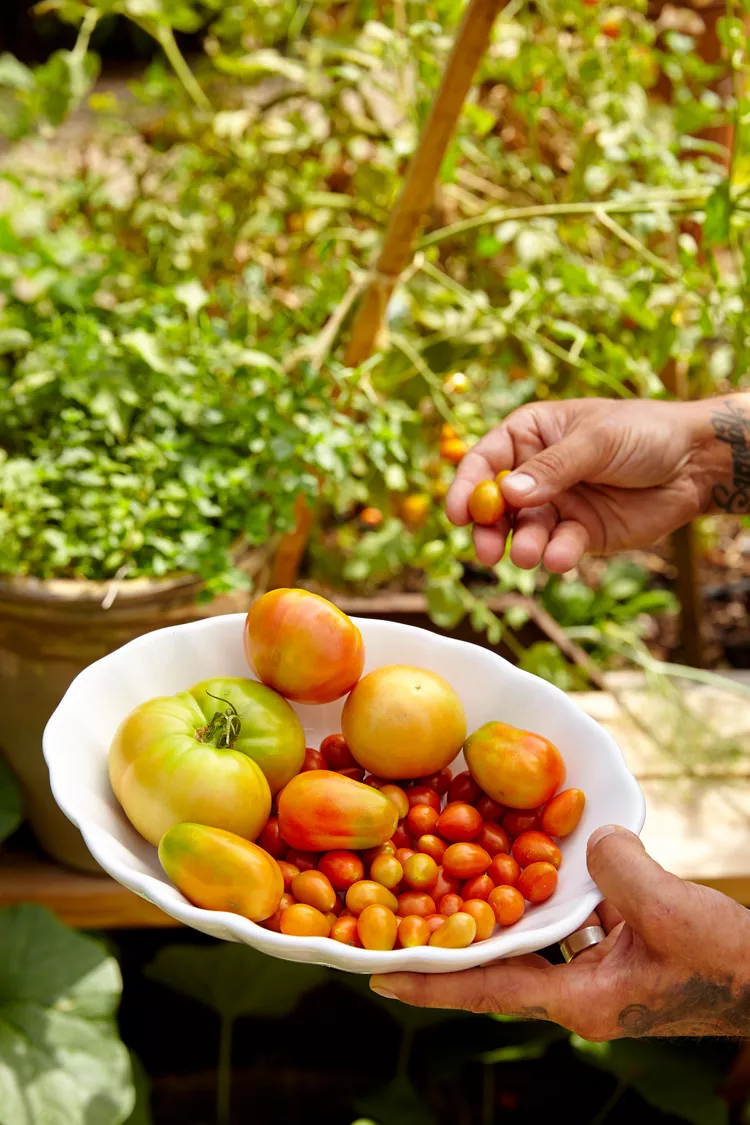
Meaty, juicy tomatoes are a sure sign of summer and are easy to grow in almost every region. You may have noticed different tomato varieties labeled determinate or indeterminate. What do these terms mean, and which is best for you? Find out the characteristics of each of these tomato types, and, most important, get tips for deciding on the best types of tomato plants for your garden so you can get the best harvest.
What is a determinate tomato?
Determinate tomatoes grow to a certain height, stop growing, and then flower. These small and often compact plants produce all their fruit over a two-to-three-week time frame. This short, intense harvest period makes determinate tomatoes a great choice for canning and freezing—large quantities of fruit are ripe at the same time for big batches of sauce, salsa, and more.
Determinate tomatoes are also a great choice for small gardens. Unlike sprawling and vining indeterminate tomatoes, determinate types have a bush-like habit and tend to top out at less than 3 feet tall and about 2 feet wide. Determinate types are often labeled bush tomatoes or patio tomatoes. An 8-foot-by-4-foot raised bed can easily hold up to four determinate tomato plants. Determinate tomatoes are great plants for containers. For best growth, plant a determinate tomato in a pot that holds at least 10 gallons of potting soil.
What is an indeterminate tomato?
Indeterminate tomatoes continue to grow, flower, and set fruit until the first frost. These vigorous plants have long branches and are known to reach lofty heights of 12 feet or more, but most top out at about 6 feet tall. Stakes or tomato cages are essential for good growth and easy harvest, and to contain the indeterminate tomatoes’ wandering stems, so they don’t overtake nearby plants. Indeterminate tomatoes produce fruit over a 2-to-3-month period beginning in mid-to-late summer.
Generally, indeterminate tomatoes produce more fruit than determinate types, thanks to their long fruiting period. From tiny grape tomatoes to extra-large slicing tomatoes, indeterminate tomatoes are available in all shapes and sizes.
Which type of tomato is best for you?
Available growing space, along with how you plan to use the fruit, will lead the way in deciding if indeterminate or determinate tomatoes are best for you. If space allows, consider planting a couple of varieties of each type.
Do you have an in-ground garden with 10 to 20 square feet of space for growing tomatoes? If so, you can grow indeterminant varieties with ease. Plan to allocate about 10 square feet to each indeterminate plant. This big footprint allows for staking or a cage to contain the rampant growth, along with space for adequate air circulation around the plant.
If your growing space is limited, opt for a determinate variety. Determinate tomatoes thrive with 4 to 6 feet of growing space in an in-ground garden or a container that holds at least 10 gallons of soil.
How do you plan to use the fruit? If a summer-long harvest of tomatoes for fresh eating atop salads, adorning cocktails, and bedazzling your next sandwich is your goal, choose indeterminate varieties. They will reliably produce perfectly ripe fruit for more than two months and only stop when freezing temperatures arrive in northern regions or when sweltering summer heat stops flowering in southern regions.
If freezing and canning tomatoes are your goal, select determinate varieties. They’ll produce several pounds of fruit within a short time frame to provide ample produce for sauce, salsa, homemade ketchup, and more.
Award-Winning Determinate and Indeterminate Tomatoes
All-America Selections (AAS) is a non-profit organization that trials and rates new fruit and vegetable cultivars. Only the best-of-the-best receive the prestigious designation of an All-America Selections winner, which makes the AAS archive a reliable source of great tomato cultivars. Here are a few favorites to look for.
Determinate Winners
‘Celebrity’ is a 1984 AAS winner that continues to stand the test of time thanks to its disease resistance and fabulous flavor. ‘Celebrity’ produces large, slicer-type tomatoes on strong, healthy plants.
‘Fantastico’ is a grape-style determinate tomato. Most petite tomatoes are on large, sprawling, indeterminate plants. ‘Fantastico’ was bred for small spaces and grows well in containers or hanging baskets. Its long clusters of red fruits resist splitting and are very easy to harvest. Expect one plant to produce as much as 12 pounds of ripe fruit.
‘Galahad’ is a 2020 winner that produces red, meaty fruit with a sweet, mild tomato flavor. A slicer-type tomato, ‘Galahad’ fruits weigh in at 12 ounces or so. The plant has a compact spread but grows to about 4 feet tall.
Indeterminate Winners
‘Chef’s Choice Yellow’ produces large, meaty fruit with a sweet flavor and perfect tomato texture. A 2017 AAS Winner, ‘Chef’s Choice Yellow’ will produce 30 or more fruits throughout the season on disease-resistant plants.
‘Juliet’ is an elongated cherry tomato. The plant fruits in clusters like grapes on long, vigorous vines. Rich in flavor and exceptionally productive, ‘Juliet’ is a favorite tomato variety because of its sweet flavor and crack resistance.
‘Pink Delicious’ is a 2022 AAS Winner that boasts the flavor, shape, and texture of an heirloom and the disease resistance of a hybrid. A large slicer-type tomato, ‘Pink Delicious’ has a sweet flavor and produces especially well in the challenging growing conditions in the Southeast and Midwest.