
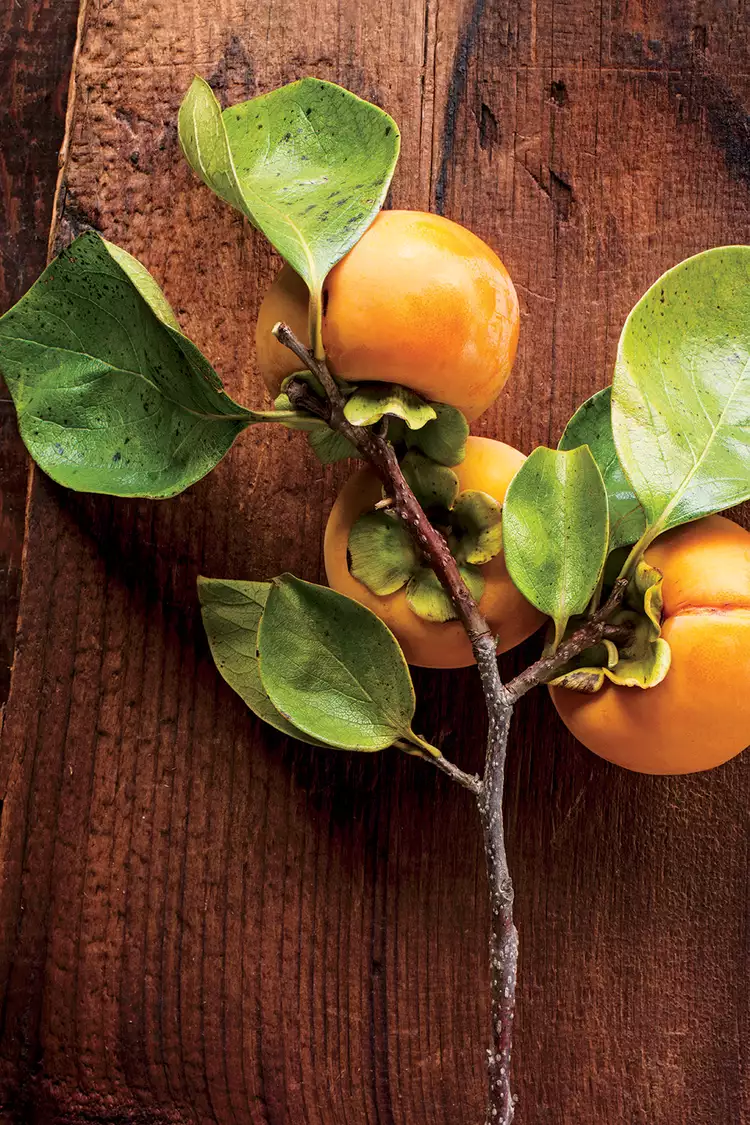
When I was younger, my grandparents had persimmon trees growing in their small orchard. I rarely noticed these trees or paid any attention as they didn’t bear fruit when the plums, cherries, and apricots were laden with summer sweetness. But as their leaves began to turn brilliant shades of yellow and orange in fall, they’d catch my eye because, as the leaves dropped, the ripening bright orange fruits stood out. Dangling like tiny pumpkins strung throughout the naked branches, it was persimmon season!
Persimmons are easy to grow in milder climates. Once established, they're very low-maintenance trees. Along with their disease resistance and drought tolerance, persimmons make excellent trees for small gardens. What’s more, persimmons can easily be grown from seed and will begin to set fruit within six years.
Types of Persimmon Species
You may be most familiar with the East Asian persimmon (Diospyros kaki) aka the Japanese Persimmon, which is sometimes sold in groceries stores. But there are actually multiple edible species, including the American persimmon (Diospyros virginiana) and Texas persimmon (Diospyros texana). Along with these species and their many cultivars (cultivated varieties), there are also hybrids between the Asian and American species combining characteristics of both.
Oriental Persimmons
By far the better known of the persimmons, the Oriental persimmons come in a multitude of cultivars, the most common being ‘Fuyu.’ Separated into two groups, the astringent and non-astringent types, they are typically allowed to remain on the tree until they have fully ripened and are especially tasty after a hard frost. Some varieties are edible when still firm and can be eaten like apples, but most are allowed to ripen until they have reached a jelly-like texture and are fully non-astringent. Oriental persimmons are less cold hardy than American persimmons and perform best in USDA Zones 7-10. Trees begin blooming in May and will grow to about 30 feet in height.
American Persimmons
Bearing smaller, astringent fruits on large trees up to 65 feet tall, these trees require plenty of room. However, what they lack in fruit size, they make up for with their hardiness and grow well in USDA Zones 4-9. American persimmons are native to the Eastern United States and as with their Asian cousins, they are very disease-resistant. Fruits are typically allowed to fully ripen until they are jelly-like in their consistency and then used for baked goods.
Steps to Grow Persimmon Trees from Seeds
Persimmons are typically available as small, grafted trees to produce specific cultivar characteristics, but persimmon seeds of any species can be grown too. Because they have a low rate of germination, it's best to collect and plant as many seeds as possible. Then, follow these steps to grow a persimmon tree from seed:
Step 1: Collect and Clean Seeds
To collect healthy, viable seeds, you’ll need to start with fresh, fully ripened fruits. Persimmon seeds will lose vitality over time, so fruit plucked directly from a tree is your best bet. Using a sharp knife, cut the fruit in half, lengthwise, to reveal the dark brown seeds within the center of the fruit. Rinse seeds in water to remove any flesh and juice remaining on the seed, then place seeds in a bowl of water for two to three days.
Step 2: Sow Seeds
After soaking, make a well-draining soil that's half potting mix and half perlite. Add your soil mix to tall plastic pots or other containers with plenty of drainage holes. Tall pots or containers are necessary for the persimmon’s long taproot that will begin growing before leaves begin to sprout. Bury pre-soaked seeds about two inches below the soil surface, leaving about three inches of space between seeds. Lightly water the soil.
Step 3: Stratification
Persimmon seeds require a period of stratification. This just means the seeds need to remain cool and moist for several weeks. Depending on your local climate, you can place your planted pots outdoors in a protected location over the winter and cover them with fallen leaves. Soil should not be allowed to dry out. In locations outside of a persimmon's preferred growing zone, stratify the seeds before planting. To do so, wrap the seeds in damp paper towels and place in a plastic bag or glass jar. Store in a refrigerator or cold cellar for at least three months.
Step 4: Germination
With spring approaching, move outdoor pots to a warm, sunny location and keep moist. Once temperatures have risen above 70℉, seedlings should begin to germinate within two to three weeks. Protect seedlings from browsing deer, rabbits, squirrels, and other critters looking for an easy spring meal. For seeds stratified indoors, after the arrival of spring, remove seeds from paper towels and plant in soil as mentioned in step 2.
Care Tips for Your Persimmon Trees
Under optimal conditions of adequate moisture, nutrient rich, well-drained soil, and full sun (8 hours or more per day) persimmon trees will thrive and bear fruit annually. Pests and diseases are rarely an issue with persimmons and usually appear only if trees are under stress. Check your trees periodically to make sure they are getting what they need to stay healthy. If problems do arise, your local university extension office can help you diagnose and treat the issue.