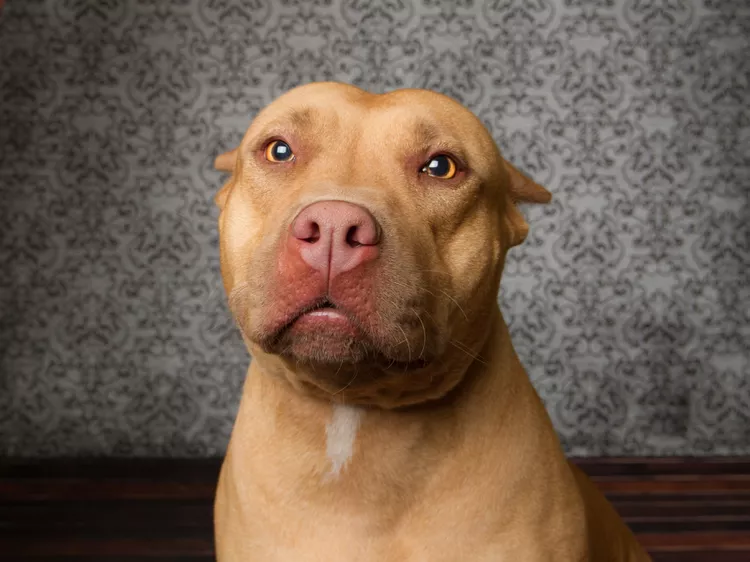
Pit bulls have unfortunately been stereotyped as aggressive and dangerous animals, but a well-socialized and trained pit bull is far from it. Modern pit bulls were actually developed specifically to be friendly and gentle toward humans, and people who live with pit bulls can attest to their loving, loyal nature. In fact, in one study, pit bull type dogs showed significantly decreased aggression to owners but increased aggression to dogs, but they did not rank highest in any aggressive category. So how did they get their reputation? Here's what to know about these commonly misunderstood dogs.
What Is a Pit Bull?
When you hear the term “pit bull,” most people picture a certain type of dog: medium- to large-sized, smooth-coated, stocky, muscular, and powerful, with a deep chest and square head. The term “pit bull” is used generally to refer to any dog of several breeds with similar builds and backgrounds. Pit bulls may be purebred or mixes of a breed considered to be a type of pit bull.
Any of the following breeds are generally classified as “pit bulls” or "pit-bull type" dogs:
- American bulldog
- American pit bull terrier
- American Staffordshire terrier
- Staffordshire bull terrier
- Bull terrier
- Mixes of these breeds
How Did Pit Bulls Get an Aggressive Reputation?
Prior to about the mid-1800s, the breeds that we today call pit bulls were once used for the sports of baiting (pitting dogs against bulls or bears and watching them fight to the death) and dog fighting (dog-on-dog combat). Back then, the dogs used—bulldog and terrier types—were bred to be large, powerful, and extremely ferocious, with both dog aggression and human aggression very common.
Thankfully, these gruesome and barbaric sports were outlawed in most parts of the world starting from about the mid-1800s on. With baiting and fighting banned, people no longer had a use for the aggressive and dangerous dogs formerly used for sport. Breeders began modifying these breeds to be gentler, smaller, and above all else, friendly toward people. The modern pit bull breeds were transformed into friendly and affectionate family companions.
What Causes Aggression in Dogs?
A well-socialized pit bull should never show aggression toward humans. With pit bulls, socialization with other dogs may be even more critical as they had a high rate of dog-directed fear. The key to decreasing fear is positively reinforced controlled socialization. A dog of any breed that does not receive proper socialization and training as a young puppy has the potential to be unpredictable or even dangerous. A pit bull’s strength can make them dangerous in the wrong hands, but this is the case with any strong, large dog.
Sadly, some people use pit bulls and other breeds for dog fighting, even though it is illegal. The oft-repeated “locking jaw” of the pit bull (said unbreakable once latched) is an urban myth. However, pit bulls are powerful and tenacious, and some nefarious people capitalize on this trait. Thanks to the pit bull’s strength and “tough” appearance, some unscrupulous dog owners train them to be guard dogs or even to be purposely vicious.
In the hands of a responsible dog owner, pit bulls are loving, attentive, playful, and easily trained. They adore being with people, including children, though with any dog, an adult should always supervise all interactions between dogs and kids. Most pit bulls are active and require plenty of daily exercise as well as consistent training so they learn to be well-behaved family members.
Some pit bulls are dog aggressive, which can be tied back to fear. As with some other breeds of dogs, a high prey drive can be an issue if smaller animals are in the home. In these cases, they do best as the only pet in the family.
Just as with any dog, socialization, positive reinforcement training, predictable handling and schedule, and dedication of their human buddy can make pit bull breeds excellent pets.