Baking soda is a great multi-purpose substance to have in your household. From cleaning to deodorizing, baking soda has many uses. However, it is always prudent to ensure that any substance you plan to use in your home around your cats is safe. Cats are not small humans and may be negatively affected by things that are otherwise safe for humans. Here, we discuss how to safely use baking soda around your cat.
Is Baking Soda Dangerous for Cats?
In general, baking soda is not dangerous for your cat with normal household use. However, it can cause toxicity if a cat ingests more than a mouthful of the powder directly. This is unlikely as few cats will consume baking soda by itself due to its unpleasant taste.
In the event that a cat does ingest baking soda, illness due to toxicity may occur. Baking soda is simply sodium bicarbonate, and if ingested in large quantities, an electrolyte imbalance may occur. The result of consuming a large amount of baking soda would be too much sodium as well as a potassium deficit in the body. In this case, you may see clinical signs such as vomiting, diarrhea, stomach pain, lethargy, incoordination, seizures, and excessive water consumption. If your cat has ingested baking soda, you must contact animal poison control or take them to the nearest veterinarian as soon as possible for treatment.
Household Uses of Baking Soda
Litter Boxes
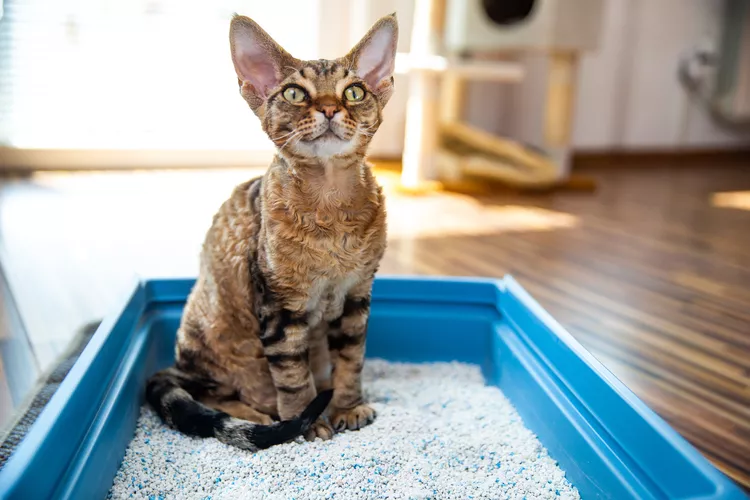
The most useful application of baking soda in a home with cats is to deodorize. Baking soda may be mixed in with cat litter to help absorb any offensive odors from the area. To use baking soda in this manner, simply stir in a few teaspoons to tablespoons with the cat litter, depending on the size of the litter box.
Laundry
If you have pets (or kids), you may be accustomed to dealing with laundry odors. Bedding, sheets, blankets, and other fabrics that your cat lies on may begin to have an unpleasant odor over time. Baking soda can be added to your washer along with the detergent to aid in eliminating these odors.
Furniture
Unfortunately, sometimes our pets decide to spend time lounging on furniture that cannot be washed. Couches, chairs, and pillows are all great places to try baking soda for odor removal. All you need to do is sprinkle a little baking soda over the area and then allow it to sit for 30 minutes. Be sure to keep your cat away from the area while the baking soda sits. A quick vacuuming of the area should leave it smelling much fresher!
Liquid Messes
Whether it is a urine accident from a pet or a spilled drink, baking soda can be very helpful in the cleanup of liquid messes. Baking soda by itself can be worked into the area, or you can add water and white vinegar to the baking soda to make a powerful cleaning solution. Either way, the baking soda should be applied to the mess area after the excess spill or urine has been blotted up but is still wet. Allow the area to soak in the baking soda or mixed solution for 30 minutes, and then clean it with a wet rag. Follow this with a brisk vacuuming of the area. Be sure to keep curious pets away while the area is soaking.
Too Short Nails
When trimming a cat’s nails, it can be easy to trim them a bit too short and cut the cuticle. Because the nail’s cuticle is very vascular, bleeding may occur. There are commercial products formulated to aid in stopping the bleeding, but baking soda may be used as well. A small dab of baking soda should be placed directly on to the end of the nail that is bleeding. Veterinary advice should be sought if the bleeding is severe or does not stop quickly.
Baking Soda vs. Baking Powder
It is essential to note that baking soda and baking powder are two very different chemical compounds, despite their similar sounding names. Baking soda is simply sodium bicarbonate, while baking powder is a mixture of sodium bicarbonate and an acid. Baking powder is intended for cooking, and the acid in it will activate when it contacts moisture. Baking powder can be dangerous for your cat to ingest and should not be used in the tips included in this article.