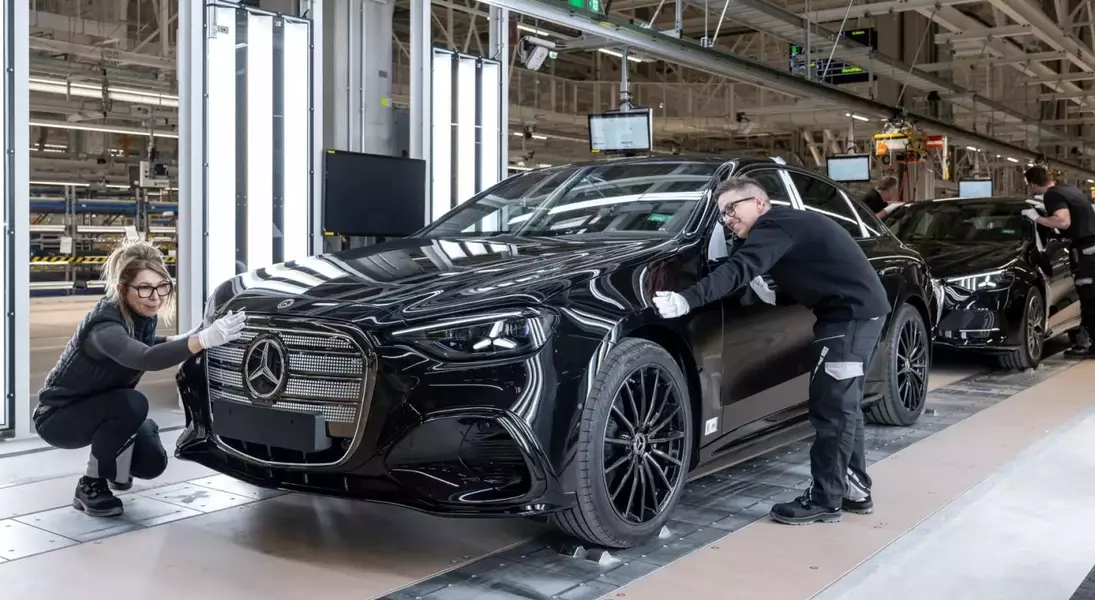
Mercedes-Benz is making significant strides in its electric vehicle (EV) manufacturing strategy by initiating the production of its new all-electric C-Class at its expansive Kecskemét facility in Hungary. This move is part of a broader commitment to electrifying its vehicle lineup, driven by a substantial €1 billion investment that has transformed the Hungarian plant into a cutting-edge automotive hub. The facility, which has more than doubled in size to 440 hectares, is now the largest automotive production site in Hungary, equipped with advanced infrastructure including new production halls, a dedicated battery assembly plant, a second press shop, and an upgraded paint shop. This strategic investment underscores Mercedes-Benz's dedication to scaling up EV production in Europe, preparing for a future dominated by electric mobility and ensuring a robust supply chain.
Beyond its increased capacity, the Kecskemét plant also serves as a testing ground for Mercedes-Benz's most innovative manufacturing technologies and sustainable practices. The company has implemented a digital twin of the new assembly hall using NVIDIA's Omniverse platform, allowing engineers to simulate and optimize production processes virtually before physical implementation. Artificial intelligence (AI) is employed for real-time defect inspection and data analysis to enhance product quality and efficiency. Furthermore, Mercedes-Benz is prioritizing renewable energy, with a new 27.4 MW solar farm and rooftop solar installations contributing to a total solar capacity of 42.3 MW, designed to meet approximately 25% of the plant's annual electricity needs. The new paint shop alone showcases a 20% reduction in energy consumption and an 80% decrease in CO2 emissions, alongside water-saving and waste-reduction initiatives, highlighting the plant's role as a model for sustainable automotive manufacturing.
Expanding EV Production Footprint
Mercedes-Benz has officially launched the manufacturing of its latest electric C-Class model at its advanced plant in Kecskemét, Hungary. This initiative signifies a critical phase in the automaker's global electrification roadmap, aiming to meet the rising demand for electric vehicles across Europe. The company injected approximately €1 billion into the Kecskemét site, significantly enhancing its infrastructure and operational capabilities. This investment facilitated the construction of new production facilities, including a state-of-the-art battery assembly plant, an additional press shop, and an innovative paint shop, effectively doubling the plant's operational footprint and establishing it as Hungary's premier automotive manufacturing complex. The electric C-Class represents a pivotal milestone as the first battery-electric model from Mercedes-Benz's core range to be produced at this facility, positioning Kecskemét as a cornerstone for the brand's next generation of electric vehicles.
A core aspect of Mercedes-Benz's strategy at the Kecskemét factory is the integration of localized component production to mitigate logistical challenges and bolster supply chain resilience. Key components such as batteries and body parts for the electric C-Class and the electric GLB are now fabricated on-site, drastically reducing the need for extensive shipping and providing enhanced flexibility in response to market fluctuations. While the company maintains a balanced approach to its powertrain offerings, with certain production lines capable of accommodating both internal combustion engine (ICE) and battery-electric models, a dedicated hall has been established solely for EV production. This strategic setup allows for seamless collaboration with other Mercedes-Benz facilities, such as the Rastatt factory in Germany, enabling adaptive manufacturing of models like the forthcoming electric GLC to align with regional demand. Furthermore, the Kecskemét plant has been designated as the exclusive manufacturing location for the upcoming compact G-Class electric variant, solidifying its importance within Mercedes-Benz's global production network.
Innovation and Sustainability in Manufacturing
The Kecskemét facility is not merely a production hub but a vibrant laboratory for pioneering manufacturing technologies and sustainable practices within Mercedes-Benz. Leveraging advanced digital tools, the company has created a comprehensive virtual replica of its new assembly hall using NVIDIA’s Omniverse platform. This digital twin allows engineers to meticulously simulate production line modifications and process optimizations in a virtual environment, minimizing potential disruptions and maximizing efficiency before any physical changes are implemented. Moreover, artificial intelligence plays a crucial role in real-time quality control, meticulously inspecting vehicles for imperfections and analyzing vast datasets to continuously refine production standards. This integration of cutting-edge technology ensures that each vehicle rolling off the assembly line meets Mercedes-Benz’s stringent quality benchmarks while optimizing manufacturing workflows.
Mercedes-Benz's commitment to environmental stewardship is deeply embedded in the operations of the Kecskemét plant, which actively embraces renewable energy and resource-efficient processes. A newly installed 27.4 MW ground-mounted solar farm, complemented by rooftop solar panels, collectively provides the factory with an impressive 42.3 MW of solar capacity. This significant investment in solar energy is projected to fulfill approximately 25% of the plant's annual electricity requirements, markedly reducing its carbon footprint. The factory’s state-of-the-art paint shop exemplifies this dedication to sustainability, boasting a 20% reduction in energy consumption and an approximately 80% decrease in CO2 emissions compared to previous facilities. Additionally, the plant has implemented comprehensive water conservation measures and waste reduction programs across all operations. Employing over 5,000 individuals, the Kecskemét plant is rapidly evolving into a pivotal and exemplary EV production center for Mercedes-Benz, showcasing a harmonious blend of innovation, efficiency, and ecological responsibility.